
Risks of Combining Kratom and Alcohol — What You Need to Know

Is It Dangerous to Mix Kratom and Alcohol?

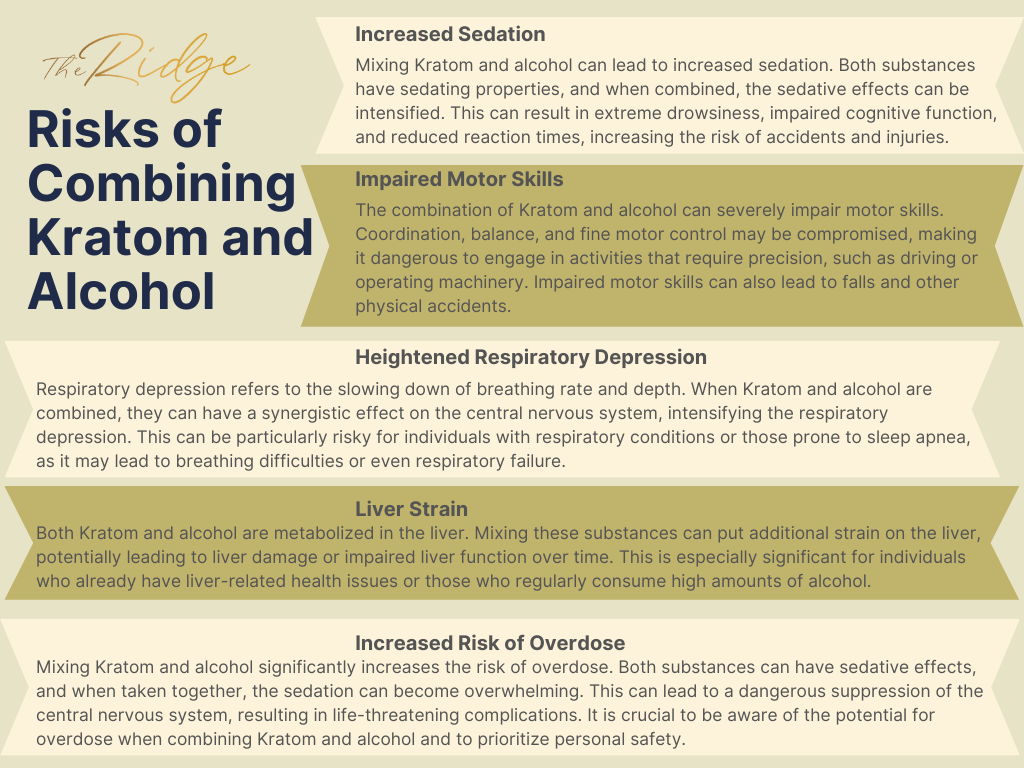
Yes. Combining kratom and alcohol is dangerous. Both substances affect the central nervous system, and when taken together their effects can be amplified in unpredictable ways — increasing the risk of excessive sedation, respiratory depression, nausea, impaired coordination, and in serious cases, overdose. The combination also accelerates the development of dependence on both substances.

Kratom is derived from the leaves of the Mitragyna speciosa tree, native to Southeast Asia. Its active compounds — mitragynine and 7-hydroxymitragynine — interact with opioid receptors in the brain. At low doses kratom acts as a stimulant; at higher doses it has sedative effects similar to opioids. Alcohol is a central nervous system depressant that slows brain activity and reduces inhibitions. When these two substances interact, the result is not simply additive — it can be synergistic, meaning the combined effect is greater than either substance alone.

How Do Kratom and Alcohol Interact in the Body?

Kratom and alcohol target different receptor systems but both ultimately suppress central nervous system activity at higher doses. Alcohol primarily acts on GABA receptors, producing its sedative and depressant effects. Kratom’s active compounds interact with opioid receptors, affecting mood, pain perception, and at higher doses, respiration.

When taken together, alcohol can modulate the opioid receptor activity of kratom, intensifying sedation or producing unpredictable changes in how each substance behaves. The depressant effects of alcohol may amplify the sedative effects of high-dose kratom, increasing the risk of respiratory depression — a potentially life-threatening slowing of breathing.

There is also a reverse risk: at low doses, kratom acts as a stimulant and may mask the sedative effects of alcohol, leading a person to drink more than they otherwise would. This can result in alcohol poisoning or dangerous intoxication without the typical warning signs.

Both substances are metabolized by the liver. Using them together puts additional metabolic strain on the liver and increases the risk of liver damage with regular use.

What Are the Immediate Effects of Mixing Kratom and Alcohol?

Common immediate effects of combining kratom and alcohol include:

  • Drowsiness and excessive sedation
  • Nausea and vomiting
  • Dizziness and impaired coordination
  • Altered mood — euphoria in some, anxiety or confusion in others
  • Impaired judgment and decision-making
  • Slowed or irregular breathing (at higher doses)

The severity of these effects depends on the doses of each substance, the order in which they were taken, the individual’s tolerance, body weight, and whether food was consumed. There is no safe formula for this combination — the interaction is unpredictable enough that outcomes can vary significantly from one use to the next.

What Are the Long-Term Risks of Regularly Combining Kratom and Alcohol?

Regular co-use of kratom and alcohol carries serious long-term health consequences:

Liver damage. Both kratom and alcohol are processed by the liver. Regular combined use accelerates liver strain and increases the risk of alcoholic liver disease, hepatitis, and eventually cirrhosis.

Accelerated dependence. Both substances carry potential for addiction individually. Using them together can compound dependence risk — tolerance develops faster, withdrawal becomes more complex, and the neurological pathways associated with craving are reinforced more aggressively.

Mental health deterioration. Alcohol is a depressant that worsens anxiety and depression over time. Kratom, though sometimes used for self-medication, can exacerbate mood disorders with regular use. Co-use is associated with worsening mental health outcomes and can make underlying conditions harder to treat.

Gastrointestinal damage. Both substances irritate the GI tract. Chronic combined use is associated with nausea, vomiting, and longer-term gastrointestinal problems.

Cognitive impairment. Regular use of either substance alone affects memory and executive function. Combined long-term use compounds these effects.
Risks of Combining Kratom & Alcohol

Is Kratom Addictive on Its Own?

Yes. Kratom has real potential for dependence and addiction. Because its active compounds interact with opioid receptors, kratom withdrawal shares characteristics with opioid withdrawal — including muscle aches, insomnia, irritability, nausea, anxiety, and cravings. The FDA has not approved kratom for any medical use and has issued warnings about its safety and abuse potential. When used alongside alcohol, the addiction risk increases for both substances.

What Are the Signs That Kratom or Alcohol Use Has Become a Problem?

Signs that combined kratom and alcohol use has crossed into addiction or dependence include:

  • Needing to use one or both substances daily to feel normal
  • Increasing the amount used to achieve the same effect (tolerance)
  • Experiencing withdrawal symptoms when stopping
  • Continued use despite negative health, relationship, or work consequences
  • Failed attempts to cut back or stop
  • Spending significant time obtaining, using, or recovering from use

If any of these describe your experience or someone you care about, professional treatment is the appropriate next step — not willpower alone.

When Should Someone Seek Treatment for Kratom and Alcohol Use?

If kratom and alcohol use is daily, compulsive, or causing harm, medically supervised treatment is strongly recommended. Attempting to stop both substances cold turkey can be dangerous, particularly with alcohol — alcohol withdrawal can cause seizures and in severe cases can be life-threatening. Medical detox provides a safe withdrawal environment with physician oversight.

The Ridge Ohio in Cincinnati offers a full continuum of care for individuals struggling with substance use, including kratom and alcohol co-dependence. The Ridge is a physician-led, Joint Commission-accredited treatment center with programs including:

  • Medical Detox — physician-supervised withdrawal management, 24/7 monitoring
  • Inpatient Residential Treatment — structured daily programming with individualized treatment plans
  • PHP and IOP — step-down care for people transitioning back to daily life
  • Dual Diagnosis Treatment — addressing co-occurring mental health conditions alongside substance use
  • Up to 52 Weeks of Aftercare — continued support after formal treatment ends

Call The Ridge Ohio at 513-457-7963 for a confidential conversation about treatment options. Insurance verification is available at no cost.

Mixing Kratom & Alcohol FAQ

Can mixing kratom and alcohol cause an overdose?

Yes. The combination of kratom’s opioid-like effects and alcohol’s CNS depressant effects can cause respiratory depression — dangerously slowed breathing — which is the primary mechanism of overdose death with opioids. The risk increases significantly at higher doses of either substance. If someone is unresponsive, has slow or stopped breathing, or has blue lips after combining kratom and alcohol, call 911 immediately.

Does kratom counteract the effects of alcohol?

At low doses, kratom can have stimulant effects that partially mask the sedative effects of alcohol, which may lead a person to drink more than they realize. This is dangerous — the depressant load on the body continues to accumulate even when the sedation feels reduced. This masking effect can lead to alcohol poisoning.

Is kratom legal in Ohio?

As of this writing, kratom is legal in Ohio. However, it is not approved by the FDA for any medical use, and it is unregulated, meaning the purity and concentration of kratom products can vary significantly. Several other U.S. states have banned or restricted kratom.

Can kratom help with alcohol withdrawal?

Some people use kratom to self-manage alcohol withdrawal symptoms, but this is medically dangerous and not recommended. Alcohol withdrawal can cause seizures and life-threatening complications. Substituting kratom for alcohol creates a new dependence rather than treating the underlying one. Medical detox under physician supervision is the safe and effective approach to alcohol withdrawal.

What does kratom and alcohol withdrawal feel like?

Alcohol withdrawal symptoms can range from anxiety, tremors, and insomnia to seizures and delirium tremens (DTs) in severe cases. Kratom withdrawal symptoms — muscle aches, insomnia, irritability, nausea, cravings — overlap with opioid withdrawal in character. Someone withdrawing from both simultaneously faces a complex picture that requires medical supervision to manage safely.

How do I talk to someone I love about their kratom and alcohol use?

Approach the conversation from a place of concern, not judgment. Focus on specific behaviors you’ve observed and how they’ve affected the person and your relationship. Avoid ultimatums in the first conversation. If the person is receptive, offer to help them explore treatment options — you can call The Ridge Ohio at 513-457-7963 on their behalf to understand what the process looks like before they’re ready to call themselves.

Does insurance cover kratom and alcohol addiction treatment?

Many PPO and private insurance plans cover medically necessary addiction treatment, including detox and residential care. The Ridge Ohio verifies insurance at no cost — call 513-457-7963 to confirm your benefits.

What makes The Ridge Ohio different from other treatment centers?

The Ridge Ohio is physician-led, Joint Commission-accredited, and located in Cincinnati, Ohio. The program offers a full continuum of care — from medical detox through residential treatment, PHP, IOP, and up to 52 weeks of structured aftercare. The Ridge is also one of only three Ohio providers authorized to perform evaluations and treatment under the Ohio One Bite Rule for impaired practitioners.

Sources:

Swogger, M.T., & Walsh, Z. (2018). Kratom use and mental health: A systematic review. Drug and Alcohol Dependence, 183, 134-140. doi: 10.1016/j.drugalcdep.2017.10.012.

Hill, K., Gibson, S., Grundmann, O., Smith, K. E., Ballard, J., & Stanciu, C. N. (2023). Evaluating health information provided to kratom consumers by good manufacturing practice-qualified vendors. Substance Abuse Treatment, Prevention, and Policy, 18(1), 21. doi: 10.1186/s13011-023-00531-4.

Prozialeck, W. C., Avery, B. A., Boyer, E. W., Grundmann, O., Henningfield, J. E., Kruegel, A. C., McMahon, L. R., McCurdy, C. R., Swogger, M. T., Veltri, C. A., & Singh, D. (2019). Kratom policy: The challenge of balancing therapeutic potential with public safety. International Journal of Drug Policy, 70, 70-77. doi: 10.1016/j.drugpo.2019.05.003.

Supporting Working Professionals During the Holidays

The holidays can be a challenging time for anyone.  For working professionals in recovery, the pressure can feel especially heavy. Year-end deadlines, family gatherings, travel, and social events all stack up at once. At The Ridge, we understand how overwhelming this season can be, and we’ve built specialized support to help professionals stay steady, balanced, and confident.

How The Ridge can Help

Find Real Work Life Balance

Between work demands and holiday obligations, it’s easy to get stretched too thin. We help clients set realistic boundaries, protect their schedule, and keep recovery front-and-center without sacrificing family time or professional responsibilities.

Managing Family and Social Stress

Holiday gatherings can bring up old patterns, uncomfortable conversations, or unexpected triggers. Our team helps clients build communication skills, set healthy limits, and stay grounded so they can enjoy time with loved ones instead of feeling overwhelmed by it.

Handling Seasonal Stress & Low Mood

Shorter days and busy schedules can take a toll on mental health. We teach clients how to spot the early signs of stress, burnout, or seasonal depression and use practical tools like mindfulness, movement, and simple self-care to stay balanced.

When appropriate, we also help clients explore medical options including meeting with our physician, reviewing medications, or discussing treatments commonly used for seasonal affective symptoms. This combination of therapeutic tools and medical support ensures each client has a well-rounded plan to stay balanced and steady throughout the season.

Navigating Holiday Events

Office parties, client dinners, and family gatherings often involve alcohol along with subtle (and sometimes not-so-subtle) social pressure. We help clients build clear, confident strategies for declining drinks, stepping away when needed, and navigating conversations that may feel uncomfortable.

Whether it’s a corporate celebration, a neighborhood get-together, or a family dinner where old patterns can resurface, we equip clients with practical tools to stay centered in their recovery and fully present in the moment without feeling pressured or out of place.

Letting Go of Perfectionism

Professionals often feel like they need to do everything perfectly.  Host, perform, show up, and keep everyone happy. We help shift that mindset toward progress, not perfection, focusing on what truly supports long-term wellness.

Avoiding Burnout

When the holidays feel more like a to-do list than a season of rest, burnout can hit quickly. We help clients identify their limits, build in breaks, and create daily recovery routines that actually restore energy instead of draining it.

Building a Support System That Lasts

Recovery doesn’t stop at the end of December. We work with clients to create strong support networks, accountability plans, and workplace strategies to keep them steady long after the holidays.

When the Holidays Become Too Much — We’re Here to Help

If this season feels heavier than usual, you don’t have to push through it alone. The Ridge offers a full continuum of care designed specifically for working professionals who need structure, support, and a safe place to reset. Whether someone is beginning their recovery journey or simply needs extra stability during a stressful time, we meet clients exactly where they are.

Our Levels of Care Include:

  • Medically Supervised Detox
    A safe, physician-led environment to help clients stabilize comfortably and begin healing with 24/7 support.
  • Residential Treatment
    A structured, therapeutic setting on our 51-acre campus where clients can step away from work pressures, focus on recovery, and rebuild healthy routines.
  • Partial Hospitalization (PHP)
    A daytime program that blends clinical therapy with real-world integration — ideal for professionals who need strong support while staying connected to life outside treatment.
  • Intensive Outpatient (IOP)
    Flexible, clinically grounded care that allows clients to maintain work and family responsibilities while continuing to build skills and stability. 

Reach Out Today

If you or someone you care about is struggling to stay balanced this holiday season, The Ridge can help.
Call us, reach out online, or connect with our admissions team — even a single conversation can bring clarity, relief, and a path forward.

Recovery doesn’t have to wait for January.
We’re here when you’re ready.

Executive Dual Diagnosis Treatment: Addressing Mental Health and Addiction

Balancing life and a top-professional role can be challenging, especially for executives managing high-ranking people, tasks, and responsibilities. This often leads to a host of mental health challenges that make both professional and personal life difficult and unfulfilling. 

Beyond the mental health challenges, executives with a mental health disorder are more vulnerable to developing a substance use disorder, and vice versa. Research has shown that people with mental health disorders are more likely to have a substance use disorder compared to the general population, making executives more prone to co-occurring disorders.

Executive dual diagnosis treatment offers tailored and comprehensive support for executives facing the challenges of both a substance use disorder and underlying mental health issues. 

What is Dual Diagnosis in Addiction Treatment?

Dual diagnosis in addiction treatment is the coexistence of a substance use disorder (SUD) and a mental health disorder in an individual. It is also commonly known as co-occurring disorder or comorbidity. Dual diagnosis recognizes that substance abuse and mental health issues often occur together and can have complex interactions.

When someone has a dual diagnosis, they may be struggling with conditions such as depression, schizophrenia, anxiety, bipolar disorder, or post-traumatic stress disorder (PTSD) alongside their addiction. Both substance use disorder and mental health disorders are considered primary and interconnected conditions that require comprehensive treatment.

Dual diagnosis can be challenging to diagnose and treat because the symptoms of addiction and mental health disorders can overlap and influence each other. Substance abuse can exacerbate mental health symptoms, and mental health disorders can increase the risk of developing substance abuse problems as individuals may turn to drugs or alcohol as a way to cope with their symptoms.

The goal of dual diagnosis treatment for executives is to support individuals in achieving and maintaining recovery from both the substance use disorder and the mental health disorder. By addressing both conditions concurrently, individuals have a better chance of long-term success and improved overall well-being.

How Common is Dual Diagnosis?

Dual diagnosis is relatively common, with high rates of co-occurrence between substance use disorders and mental health disorders. According to the Substance Abuse and Mental Health Services Administration (SAMHSA), in the United States, approximately 9.2 million adults had a co-occurring mental illness and substance use disorder in 2019.

What are the Symptoms of Co-occurring Disorders?

The symptoms of dual diagnosis (co-occurring disorders) can vary widely depending on the specific condition and individual. This is because different genetic, physical, relationship, and work-related factors influence co-occurring disorders in different people. The symptoms can include:

  • Feeling persistently sad and losing interest in activities
  • Excessive worrying and feeling restless
  • Extreme mood swings, ranging from high energy to sadness
  • Having flashbacks, intrusive thoughts, and trouble sleeping after a traumatic event
  • Having unwanted thoughts or fears and performing repetitive behaviors to reduce anxiety
  • Sudden and intense fear or discomfort, accompanied by physical symptoms
  • Feeling extreme fear or anxiety in social situations and avoiding them
  • Experiencing delusions, hallucinations, and difficulties with thinking and emotions
  • Having intense mood swings, unstable self-image, and problems with relationships
  • Trouble paying attention, being hyperactive or impulsive
  • Having unhealthy eating patterns, fear of gaining weight, and distorted body image
  • Having problems with drugs or alcohol, feeling out of control with substance use
  • Displaying patterns of behavior, thoughts, and emotions that cause problems in relationships and self-image
  • Having trouble sleeping, excessive sleepiness, or experiencing disturbances during sleep
  • Experiencing difficulties with communication, social interaction, thinking, emotions, and coping skills, along with mental health challenges.

It’s important to remember that these are general symptoms, and a professional evaluation is necessary to obtain an accurate diagnosis and appropriate treatment.

What is the Impact of Mental Health on Executives?

Executives, like anyone else, can face unique challenges and pressures in their professional lives that can impact their mental well-being. The impact of mental health on executives is a topic of growing recognition and importance, acknowledging that mental health is a fundamental aspect of overall well-being for executives and everyone else.

Executives often carry significant responsibilities, making critical decisions, managing teams, and navigating complex organizational dynamics. The demands of their roles, combined with high expectations and constant pressure to perform, can create a considerable burden on their mental health.

It’s essential to recognize that executives, just like any other individuals, may experience various mental health challenges. These challenges can range from stress, anxiety, and burnout to depression, imposter syndrome, and work-life balance struggles.

However, it’s also essential to emphasize that, as an executive, you can prioritize your mental health and make positive changes in your life. By taking care of your well-being, you can enhance your effectiveness and productivity, build healthier work environments, and inspire your teams to do the same.

Promoting mental health among executives can have several positive outcomes. When executives prioritize their mental well-being, they often experience increased resilience, improved decision-making capabilities, enhanced creativity, and better interpersonal relationships. You can create a positive ripple effect throughout your organization, fostering a culture that values well-being, inclusivity, and employee satisfaction.

Common Dual Diagnosis Treatments Offered at The Ridge for Professionals

Common dual-diagnosis treatments for executives offered by The Ridge Ohio involve a comprehensive and integrated approach that addresses both the substance use disorder and the underlying mental health challenges. Here are some dual-diagnosis therapies that can be beneficial for executives:

1. Assessment and Diagnosis

Thorough assessment and accurate diagnosis are essential for executives with a dual diagnosis. This involves a comprehensive evaluation of the substance use disorder, mental health symptoms, and any underlying factors contributing to the co-occurring conditions. A precise diagnosis helps guide the development of an individualized treatment plan.

2. Integrated Treatment Programs

These programs are specifically designed to address both the substance use disorder and the mental health condition simultaneously. These programs typically involve a combination of evidence-based therapies, medication management (when necessary), and support groups. Integrated treatment ensures that both conditions receive equal attention and appropriate interventions.

3. Individual Counseling

Individual counseling plays a vital role in dual diagnosis treatment for executives. In one-on-one therapy sessions, executives can explore the underlying causes and triggers of their substance use and mental health challenges, develop coping strategies, and work towards personal growth and recovery. Cognitive-behavioral therapy (CBT), dialectical behavior therapy (DBT), and motivational interviewing are commonly used therapeutic approaches.

5. Stress Management Techniques

Executives often face high levels of stress, which can contribute to both substance use and mental health issues. Therefore, it is crucial to incorporate stress management techniques into treatment. This may include mindfulness practices, relaxation exercises, time management strategies, and prioritizing self-care activities.

6. Relapse Prevention Planning

Executives in dual diagnosis treatment can benefit from developing relapse prevention plans. These plans are personalized strategies to identify triggers, manage cravings, and develop healthy coping mechanisms. Executives can work closely with their treatment team to create a comprehensive relapse prevention plan that suits their unique needs.

7. Aftercare and Continued Support

After completing a dual diagnosis treatment program, ongoing support and aftercare are crucial for executives. This can involve participation in support groups, continued therapy sessions, regular check-ins with healthcare providers, and access to recovery resources. Continued support helps executives maintain their recovery, manage stress, and prevent relapse in the long term.

The treatment approach for executives should also consider their professional responsibilities and work environment. Confidentiality, flexibility, and support during the treatment process can help executives maintain their privacy and successfully navigate their roles while prioritizing their mental health and recovery.

What are the Benefits of Executive Dual Diagnosis Treatment

Executive dual diagnosis treatment offers several benefits that are tailored to meet the needs and challenges faced by executives. Some of the key benefits include:

1. Comprehensive Approach

Executive dual diagnosis treatment addresses both the substance use disorder and the underlying mental health challenges simultaneously. By integrating the treatment of both conditions into a comprehensive approach, executives receive holistic care that addresses the interconnected nature of their struggles. This comprehensive approach boosts the likelihood of successful recovery and long-term well-being.

2. Tailored Strategies

Executive dual diagnosis treatment recognizes the specific dynamics of executive roles and work environments. Treatment strategies are customized to accommodate busy schedules, maintain confidentiality, and address the stressors and pressures associated with executive positions. By tailoring the treatment approach, executives can effectively balance their professional responsibilities with their recovery journey.

3. Enhanced Performance and Productivity

By addressing the underlying mental health challenges and substance use disorder, executive dual diagnosis treatment can significantly improve an executive’s overall well-being. Improved mental health often leads to increased resilience, better decision-making, enhanced creativity, and improved interpersonal relationships. These positive changes can positively impact an executive’s performance and productivity, leading to professional growth and success.

4. Work-Life Integration

Executive dual diagnosis treatment emphasizes the importance of work-life integration and achieving a healthy balance between personal and professional life. Executives learn effective stress management techniques, time management strategies, and work-life balance skills that help them navigate their roles with greater ease and reduce the risk of relapse. This balance contributes to overall well-being and long-term recovery.

5. Peer Support and Networking

Executive dual diagnosis treatment often provides opportunities for executives to connect with peers who are facing similar challenges. Group therapy and support groups create a supportive environment where executives can share experiences, gain insights, and build a network of support. This camaraderie fosters understanding, reduces feelings of isolation, and promotes a sense of community among executives in treatment.

6. Leadership Development

Some executive dual-diagnosis treatment programs incorporate leadership development components that focus on enhancing leadership skills, effective communication, and self-awareness. By addressing the intersection between mental health and professional success, executives gain valuable tools and strategies to navigate their roles with resilience, authenticity, and emotional intelligence.

7. Long-Term Recovery and Sustainable Well-being

Executive dual diagnosis treatment aims to support executives in achieving long-term recovery and sustainable well-being. By addressing both substance use disorder and the underlying mental health challenges, executives are equipped with the necessary tools and coping mechanisms to maintain their recovery even amidst the demands of their professional lives. This contributes to their overall health, happiness, and continued success.

It is important to remember that the benefits of executive dual diagnosis treatment extend beyond the individual executive. By prioritizing mental health and recovery, executives create a positive ripple effect in their organizations, fostering a culture of well-being, improved employee satisfaction, and increased productivity.

Conclusion

By addressing the unique needs and dynamics of executive roles and work environments, this specialized treatment approach provides numerous benefits. From a comprehensive and integrated approach to tailored strategies that accommodate busy schedules and maintain confidentiality, executives receive the support necessary to achieve successful recovery and long-term well-being. 

Improved mental health leads to enhanced performance and productivity, while work-life integration and peer support foster resilience and reduce feelings of isolation. Leadership development components further empower executives to navigate their roles with authenticity and emotional intelligence. 

Ultimately, executive dual diagnosis treatment not only benefits the individual executive but also promotes a culture of well-being within organizations, contributing to employee satisfaction and increased productivity. By prioritizing mental health, executives can achieve sustainable recovery and success, creating a positive impact that extends beyond themselves.